Business Insights
Malaysian Street Food Business Trends and What Vendors Can Learn
Explore six practical shifts affecting Malaysian street-food businesses, from QR payments and food safety to channel mix and packaging decisions.
Semart Editorial Team
7 min read
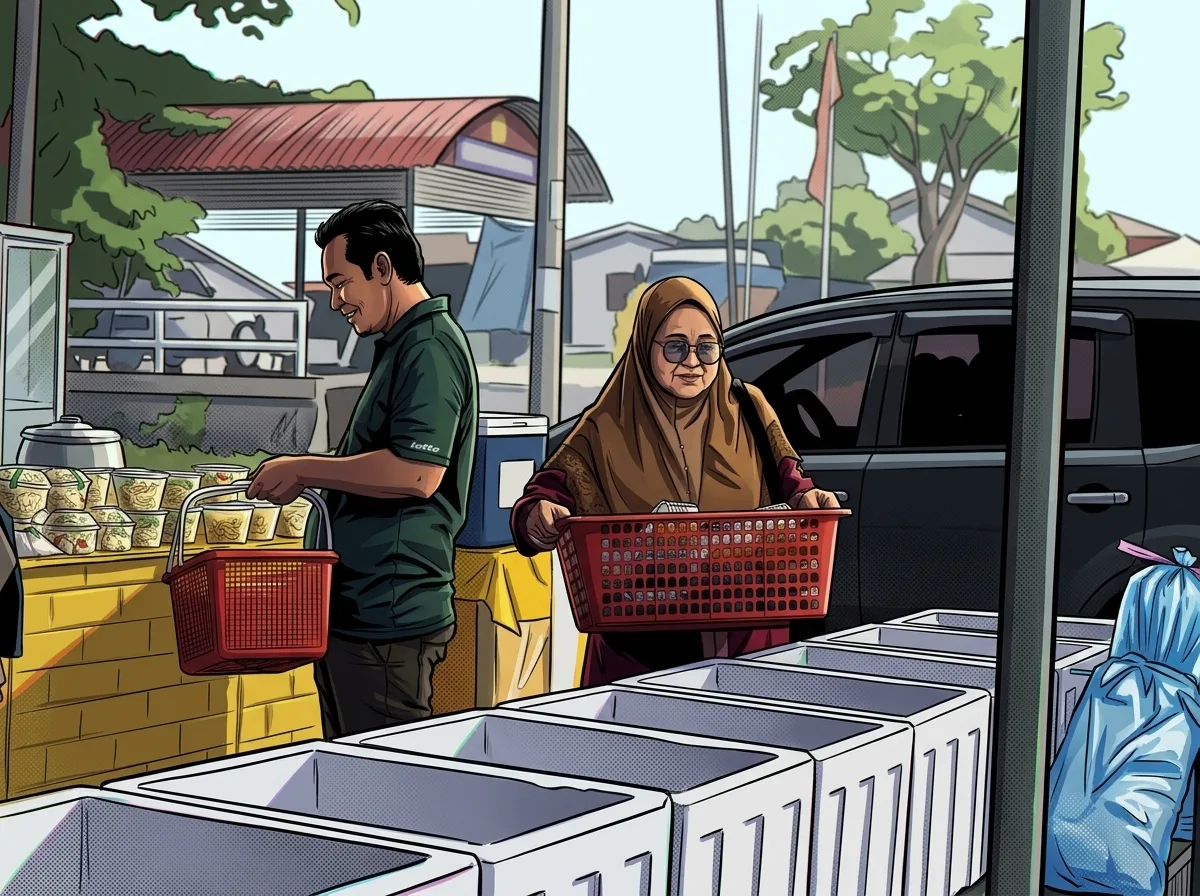
Malaysian street food businesses are shaped by more than changing tastes. Payment habits, food-safety requirements, packaging expectations and the economics of each sales channel all affect how a vendor operates.
The useful question is not which trend will become popular next. It is which operating shifts can improve convenience, protect food quality or strengthen margins without making a small stall unnecessarily complex.
Here are six Malaysian street food business trends worth evaluating, followed by a practical way to decide which ones belong in your business.
1. QR payment is becoming part of the counter flow
Cash remains useful, but many customers now expect a fast cashless option. DuitNow QR gives participating banks and e-wallets a common national QR standard, which can reduce the need to display a collection of separate codes. PayNet describes the DuitNow QR standard as a single QR that can receive payments from participating providers.
For a vendor, offering QR payment is only the first step. The counter process also needs to answer several questions:
Who confirms that the payment succeeded?
How is the payment matched to the correct order?
What happens if the customer's screen shows pending?
How are QR receipts reconciled at the end of the day?
A screenshot alone should not become the only proof of payment. Staff should know which confirmation screen or merchant record to check and how to handle an interrupted transaction.
The operational goal is simple: make cashless payment convenient without creating uncertainty between the counter, kitchen and daily sales record. A POS-system acceptance test should include that confirmation and reconciliation flow.
2. The best channel mix is not always the largest one
A street-food business can sell through a stall, takeaway counter, delivery platform, event booth, social channel or advance order. Each channel can reach a different customer, but it also changes costs and workload.
Delivery, for example, may add commission, packaging and longer holding time. An event can create high traffic but involve transport, setup, weather exposure and a fixed participation fee. Advance orders may improve planning but require reliable cut-off times and pickup labels.
Measure each channel separately. At minimum, track:
sales;
ingredient and packaging cost;
channel fees;
labour hours;
cancelled or refunded orders;
unsold stock; and
average order value.
A channel with higher revenue can still contribute less profit. Before expanding it, calculate what remains after its direct costs and check whether it disrupts service for existing customers.
3. Food safety is an operating system, not a certificate
Malaysia's Food Hygiene Regulations 2009 make food-handler training compulsory through schools recognised by the Ministry of Health. Vendors should also check the current vaccination, licensing and local-authority requirements that apply to their location and business format.
Training matters, but daily routines determine what customers actually receive. A small food business needs repeatable controls for:
handwashing and personal hygiene;
separation of raw and ready-to-eat ingredients;
temperature and time control;
cleaning of utensils and preparation surfaces;
covered storage and pest prevention;
allergen questions; and
disposal of unsafe or expired food.
Turn these into opening, service and closing checklists. Record exceptions, such as a refrigerator outside its safe range or an ingredient held too long. A short log can help the owner find recurring problems instead of relying on memory.
Food safety also affects growth. A recipe that is safe and consistent for 20 portions may require different preparation, storage and holding controls at 100 portions.
4. Menu experimentation works better with boundaries
Street food has always evolved. Vendors combine local preferences, seasonal ideas and new formats to create reasons for customers to return. The risk is treating every idea as a permanent menu addition.
A crowded menu can increase ingredient waste, preparation time, staff training and ordering mistakes. Test a new item as a controlled experiment instead:
Define the customer and occasion.
Set the test period and production quantity.
Calculate the full portion cost, including garnish and packaging.
Decide what result would justify keeping it.
Record sales, waste, preparation time and customer feedback.
Use ingredients already shared with proven items where possible. This limits the amount of stock that depends on one untested product. The M Coconut Shake archive story provides a related example of separating a core range from branch-level menu tests.
The same discipline applies to viral flavours. Attention can create an initial queue, but repeat purchase, reliable production and acceptable margin determine whether an item deserves a permanent place.
5. Packaging decisions need local and product-level checks
Packaging affects heat, texture, leakage, portion presentation and delivery time. It is also subject to changing environmental rules and customer expectations.
Malaysia has national roadmaps concerning single-use plastics and plastics sustainability, but implementation can differ by state and local authority. Vendors should verify the current rules for the places where they trade rather than assume that one date or requirement applies identically everywhere.
Choose packaging by testing the complete journey:
Does fried food remain acceptably crisp?
Can sauce leak during transport?
Is hot food placed in material intended for that use?
Can staff close and label it quickly?
Does the cost still fit the item's margin?
Can packaging volume be reduced without harming safety or quality?
A material described as sustainable is not automatically suitable for every dish. Product protection, lawful use and realistic waste handling all belong in the decision.
6. Mobile and event trading rewards a smaller, faster system
Night markets, pop-ups, festivals and food trucks can place a business in front of new customers. They can also expose weak preparation and stock planning very quickly.
A mobile setup has limits on space, power, water, refrigeration, storage and staff movement. A focused menu is often easier to produce consistently than the full stall menu. Decide in advance:
the maximum number of portions;
which preparation happens off-site;
how cold and hot food will be controlled;
the payment fallback if connectivity fails;
who handles orders, payment and production; and
the stop-selling point for each item.
After the event, compare revenue with ingredients, packaging, labour, transport, rental and unsold stock. Keep customer reach as a separate benefit rather than using it to hide an unprofitable event.
Use a weekly trend scorecard
Not every change deserves an immediate investment. Review one idea at a time using a simple scorecard.
Question	Evidence to collect
Does the customer want it?	Requests, conversion and repeat purchase
Does it improve service?	Queue time, order errors and fulfilment time
Is it financially sound?	Contribution after direct channel costs
Can the team repeat it?	Training time, exceptions and rework
Is it safe and lawful?	Current guidance, licences and process checks
Can it be tested cheaply?	Small batch, limited period or one location
Set a review date before the test begins. Then choose one of three outcomes: adopt it, adjust it or stop it. This prevents a temporary experiment from becoming a permanent cost by default.
Build around evidence, not novelty
The strongest Malaysian street-food businesses do not need to follow every visible trend. They need to understand which changes solve a real customer or operating problem.
Start with the basics: safe food, clear order management, correct payment records, consistent portions and a menu the team can execute. Add a new channel, payment method, product or package only when its benefit can be observed and its cost can be measured.
That approach allows a street-food business to evolve without losing the speed, character and discipline that made customers choose it in the first place.
About the author
Semart Editorial Team
The editorial team at Semart Sdn. Bhd.