Business Insights
Practical Traits That Help Entrepreneurs Build Resilient Businesses
Entrepreneurial resilience is not a fixed personality trait. Learn practical habits for planning, adapting, using feedback and recovering from setbacks.
Semart Editorial Team
7 min read
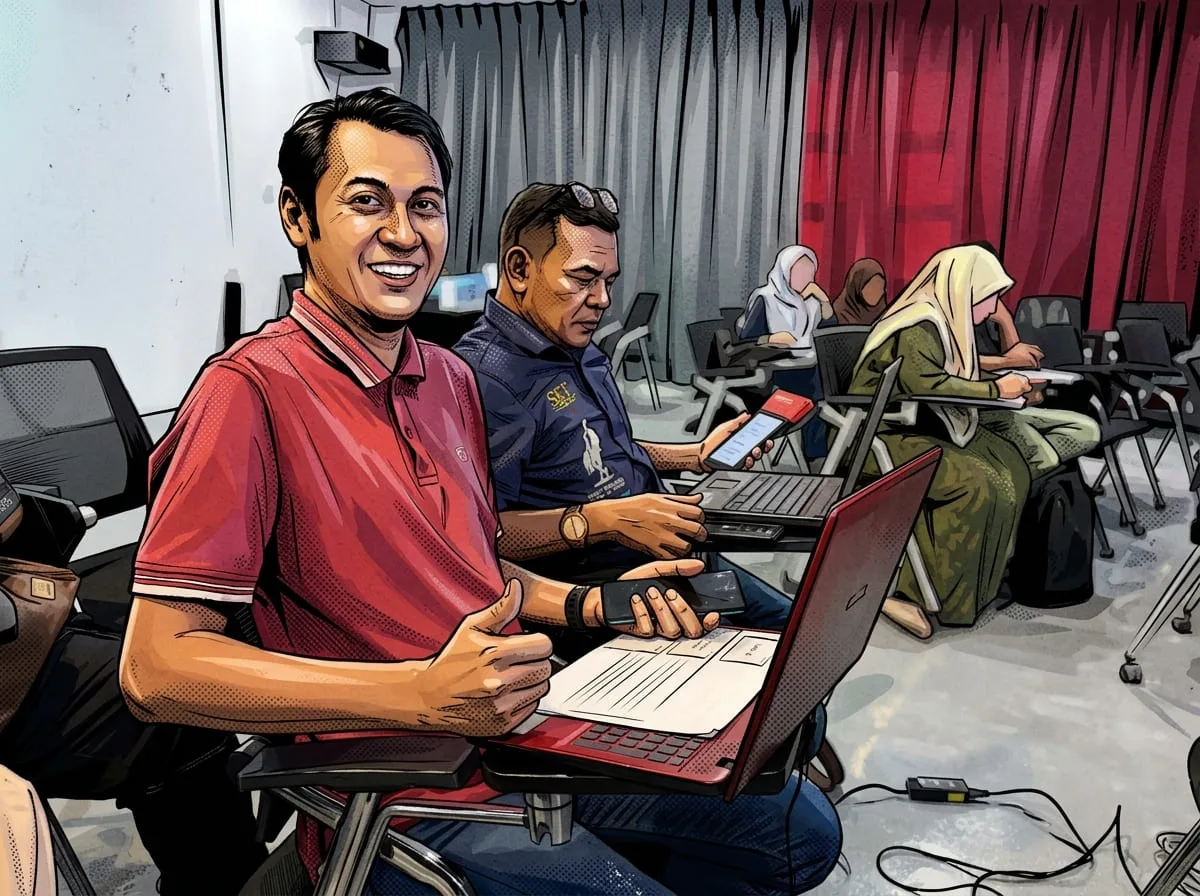
The most useful traits of resilient entrepreneurs are not heroic personality qualities. They are habits that help a person and a business prepare for strain, respond with evidence and recover without repeating the same mistake.
This matters because resilience is often reduced to "never give up." Persistence can help, but continuing with a broken plan is not resilience. Sometimes the stronger response is to stop, learn, protect cash or change direction.
Recent research also treats entrepreneurial resilience as more than toughness. A 2026 PLOS One study protocol describes it as a multidimensional, dynamic capability shaped by context and resource limits. The study is a protocol, not a completed outcome study, so it helps frame the concept rather than prove that one behaviour guarantees success.
1. Plan in layers, not with one fixed forecast
A resilient plan includes a goal, the assumptions behind it and a response if those assumptions fail.
For example, a small food business planning a weekend event might prepare three views:
the expected sales and stock level;
a slower-sales case that limits waste;
a high-demand case with a clear restocking or sell-out rule.
The plan should also identify what can be changed quickly. A long lease, new employee or financed asset creates a different level of commitment from a short trial.
The OECD SME and Entrepreneurship Outlook 2023 discusses business continuity planning, backup suppliers, financial buffers, information sharing and flexible networks as parts of SME resilience. These are business practices, not personality labels.
Practice: once a month, choose one important assumption and ask what the business would do if it became false.
2. Use feedback without surrendering judgment
Resilient entrepreneurs look for evidence that challenges their first view. They do not treat every comment as an instruction.
Separate feedback into three groups:
Observed behaviour: what a customer or employee actually did.
Reported experience: what the person says was easy, hard or valuable.
Suggested solution: what the person thinks should be built or changed.
The first two groups describe a problem more reliably than the third. Several customers may suggest different fixes for the same delay. The owner's task is to identify the shared need and test the smallest useful change. The Syirazi Sharif entrepreneurship story offers a practical example of using weak traction to redefine both the product and buyer.
Practice: after a change, define one measure and one review date. Without both, the team may remember only the loudest response.
3. Learn from ordinary uncertainty
Learning should not begin only after a crisis. Supplier delays, quiet periods, staff absence and sudden demand already show how the business behaves under pressure.
A peer-reviewed 2024 study on developing entrepreneurial resilience through learning examined rural entrepreneurs in two regions of Indonesia. It proposed readiness, response and opportunity as connected areas of learning from uncertainty. The setting is specific, so its findings should not be assumed to represent every entrepreneur. Its practical lesson is still useful: resilience can develop through a continuous learning process, not only through a single dramatic recovery.
After an unexpected event, ask:
What sign appeared before the problem?
Which part of the response worked?
What slowed the response?
Which relationship, skill or resource was missing?
What will be different next time?
Write the answers while the event is fresh. A short record turns experience into something the team can reuse.
4. Protect financial room to act
Adaptation usually has a cost. A business may need to replace stock, change a supplier, repair equipment or survive a quiet period. If every ringgit is already committed, the owner has fewer choices. A regular financial-literacy routine for entrepreneurs can make those commitments and options easier to see.
Financial discipline does not mean avoiding all risk. It means knowing the size and timing of each commitment.
Useful habits include:
keeping business and personal transactions separate;
reviewing near-term cash needs each week;
knowing which costs continue even when sales slow;
setting a rule for owner withdrawals;
comparing a new commitment with a lower-cost test;
building a buffer that reflects the business's real risks.
There is no universal buffer amount. A stall with flexible costs and frequent cash sales faces a different pattern from a business with payroll, rent and customers who pay later.
Practice: before a large commitment, model a slower-sales month and check which payments still fall due.
5. Adapt the method while keeping the goal clear
Adaptability is not constant change. A business that reacts to every weak day can become unstable.
Define what remains fixed and what can move. The fixed point might be the customer problem, food quality or a cash limit. The flexible part might be the menu size, service hours, channel or promotion.
Use small tests where possible. A one-week menu change creates evidence with less risk than replacing the full menu at once. A trial delivery area is easier to evaluate than immediate expansion across a city.
Practice: write down the reason for each test, the measure that will be reviewed and the condition for continuing, changing or stopping it.
6. Build relationships before they become urgent
Small businesses depend on customers, staff, suppliers, advisers and other owners. Those links can provide information, options and practical support during disruption.
The OECD report notes that networks can support anticipation, mitigation and adaptation, but can also create risk when a business depends too heavily on one connection. Resilience therefore comes from useful relationships and clear alternatives, not simply from having a large contact list.
Examples include:
knowing a backup supplier's lead time before the main supplier fails;
cross-training staff for a critical task;
asking an accountant about a cash issue before a deadline;
maintaining direct customer communication outside one marketplace;
sharing operating lessons with another business without exposing private data.
Practice: identify one relationship the business depends on and one safe alternative.
7. Recover deliberately after a setback
Recovery is not a race back to the old routine. The old routine may have contributed to the problem.
Use three steps:
Stabilise: protect people, cash, customer commitments and essential records.
Review: separate the immediate trigger from the conditions that made the damage worse.
Rebuild: restore only what still serves the business, then test the changes.
An honest review avoids two extremes. The owner should not blame every result on personal failure, and should not dismiss every result as bad luck. Some factors are outside the business's control. Others can be prepared for next time through the controls described in five costly small-business mistakes to avoid.
Resilience is a practice, not a promise
Planning, feedback, learning, financial discipline, adaptation, relationships and deliberate recovery can improve how a business responds to uncertainty. They cannot guarantee survival or growth. Market conditions, health, policy, access to finance and many other factors also matter.
That limitation makes the practical view more useful, not less. An entrepreneur does not need to fit a stereotype of endless confidence. Resilience grows when the business can see risk earlier, preserve choices, learn from what happened and make the next decision with better information.
About the author
Semart Editorial Team
The editorial team at Semart Sdn. Bhd.