Semart Stories
Roti Kitab by Nikafé: Managing Demand Beyond the Queue
An archive story about how clearer order capture, production routing and collection numbers can help a busy breakfast business manage demand.
Semart Editorial Team
6 min read
From the Semart archive.
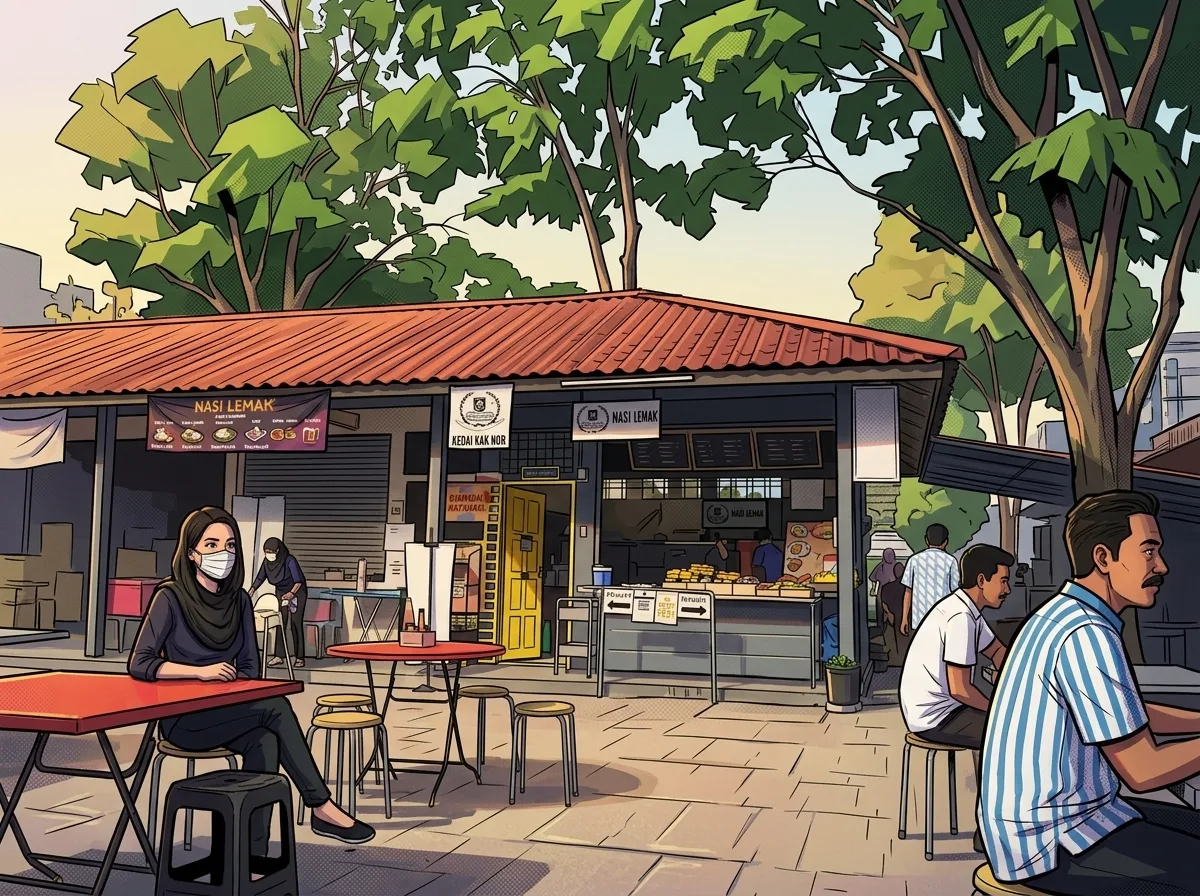
In September 2022, Semart told the story of Roti Kitab by Nikafé, a busy breakfast stall beside Taman Tasik Section 7 in Shah Alam. The queue showed strong demand, but it also exposed the type of order-management problem that appears when a request must move from the customer to separate preparation stations and back to collection.
This article revisits the workflow described in that archive. It does not claim that Roti Kitab currently uses Semart or that its present operation follows the same process.
A lakeside breakfast business
The old story identified the owner as Nik, also known as PokNik, and described a menu that had grown from roti kitab and drinks to several toast variations and Kelantanese breakfast dishes.
Later reporting supports the identity and location but corrects part of the timeline. In May 2024, The Star profiled owner Nik Nasrullah Nik Kamaruddin at the same lakeside stall and reported that he began operating in 2021. Semart's archive had said 2020. This rewrite uses the independently reported 2021 date where a start year is needed and treats the old date as an archive inconsistency.
The 2024 report also described 10 types of roti kitab and a broader range of Kelantanese food supplied by other vendors. It confirms that the business remained active after the original Semart story, but it does not establish any continuing relationship with Semart.
Why a queue is not the full measure
A visible queue can signal demand. It can also reveal that the system is processing customers more slowly than the kitchen's real capacity allows.
To understand the difference, an operator needs more than the number of people waiting. Useful measures include:
time from joining the queue to placing an order;
time from order confirmation to production start;
preparation time by station;
time from completion to collection;
orders corrected, remade or abandoned;
items that create repeated bottlenecks.
The total waiting time is the result of several smaller queues. Measuring those stages helps the owner find the actual constraint instead of simply asking every team member to work faster.
Capture the order once
Semart's 2022 account said orders were handwritten separately for the kitchen and drinks counter. Rewriting an order creates a second chance to omit an item, misread a note or send different information to each station.
A stronger flow captures the confirmed order once and uses that record to create the work needed by each station.
For example:
the cashier confirms the items, quantities and options with the customer;
the system assigns one order number;
food items route to the food station;
drinks route to the drinks station;
every station works from the same confirmed order;
collection uses the same order number.
The stations do not need to see irrelevant detail. They do need a shared reference that keeps the separate tickets connected.
Design tickets for the person preparing the order
A ticket is useful only when staff can understand it during the busiest period.
Preparation tickets should make these details easy to find, and the physical setup should pass a thermal-printer acceptance test:
order number;
item and quantity;
size, variant or modifier;
dining or takeaway status;
customer note that affects preparation;
time received;
station or printer destination.
Long menus need consistent product names. A cashier shorthand that makes sense at the counter may confuse someone preparing drinks. If a modifier changes an ingredient, portion or station, the ticket should show that difference in a predictable place.
The team should also test what happens when a printer has no paper or loses its connection. A printed ticket is not a control if the system quietly fails and nobody can see which order needs recovery.
Give customers one collection reference
The old article described adding an order number to the receipt so customers could identify when their meal was ready. This is a small control with several benefits.
It reduces reliance on names that may be misheard, gives the counter and customer the same reference and helps staff resolve questions without reading an entire order aloud.
The collection process still needs clear rules:
who marks the full order ready;
whether food and drinks are collected together;
how partial orders are held;
how the number is announced or displayed;
what staff do when nobody collects a completed order;
how a missing item is reconnected to the correct ticket.
An order number does not remove waiting. It makes the state of the wait easier to communicate.
Measure the change before claiming success
The original post claimed that the new workflow reduced fulfilment time from about one hour to 20 minutes. The archive does not provide a measurement period, sample, definition of start and end time or comparison conditions.
That figure is not repeated here as a verified outcome.
For a business testing a new order flow, a simple measurement plan is enough. The same discipline helps an operator separate evidence from novelty when evaluating Malaysian street-food business trends:
define when the timer starts and stops;
sample similar days and trading periods;
record order size and any exceptional delay;
compare the median as well as the slowest orders;
track remakes and missing items alongside speed;
ask staff where work still pauses.
A faster average can hide a few very poor experiences. The aim is a flow that is both quicker and more predictable.
Keep a recovery path for busy service
Every ordering setup will eventually face a printer fault, network interruption, sold-out item or incorrect order. Staff need a recovery method that does not create a second uncontrolled queue.
A practical recovery plan identifies:
the person who decides whether to pause new orders;
a visible list of confirmed but incomplete orders;
the safe method for reprinting without duplicating production;
a manual fallback with unique order numbers;
how recovered transactions enter the final sales record;
how the incident is reviewed after service.
Fallback does not mean returning to loose paper with no reconciliation. It means preserving the same order identity through a temporary process.
What the Roti Kitab story teaches
The archive framed Semart's work as a product success story. Its lasting lesson is about order identity.
When demand is high, the customer, cashier, food station, drinks station and collection counter must all refer to the same confirmed order. Clear routing prevents staff from rebuilding it, while one collection number helps the customer follow its progress.
The queue is only what people can see. The real work is designing the path behind it so every order remains understandable from payment to pickup.
About the author
Semart Editorial Team
The editorial team at Semart Sdn. Bhd.